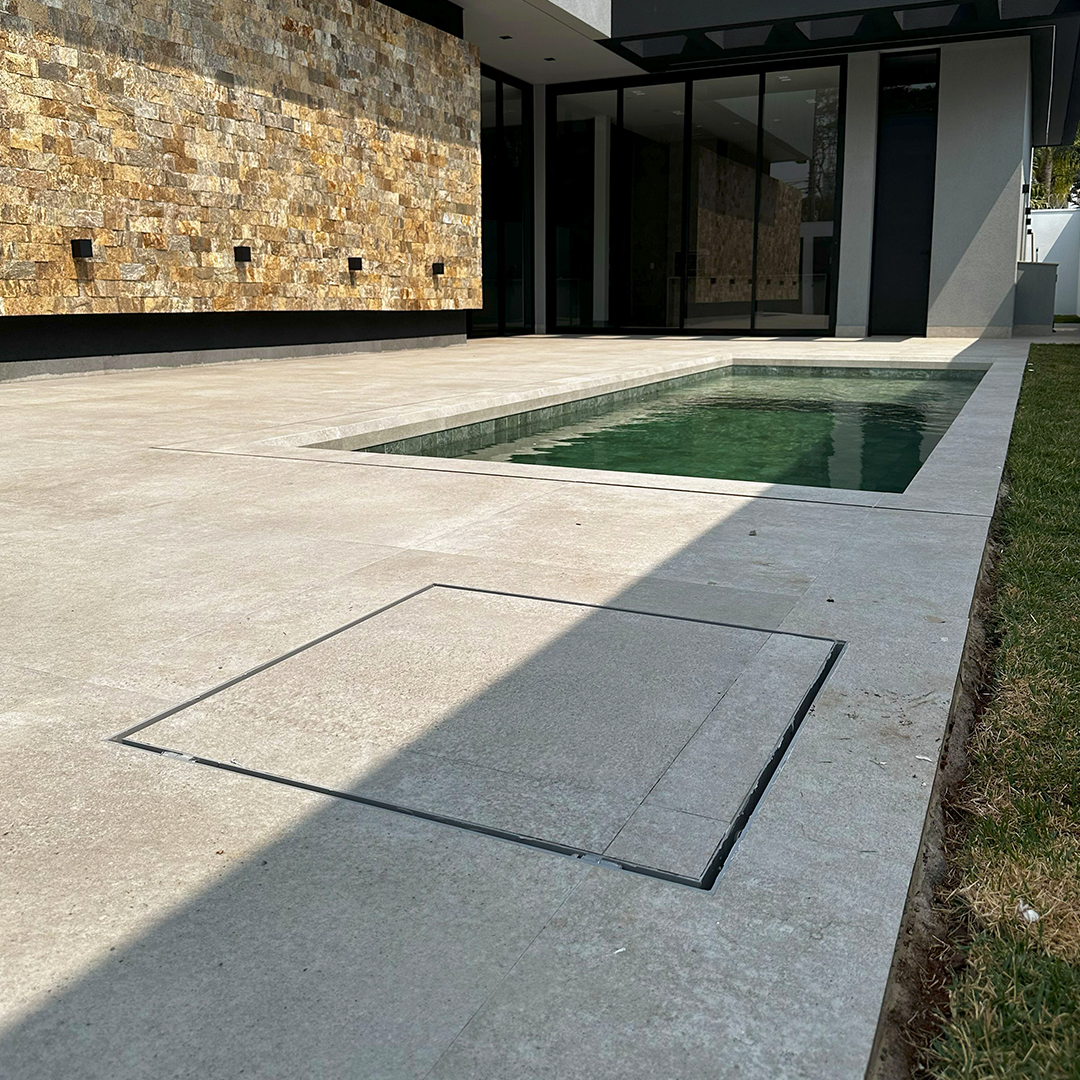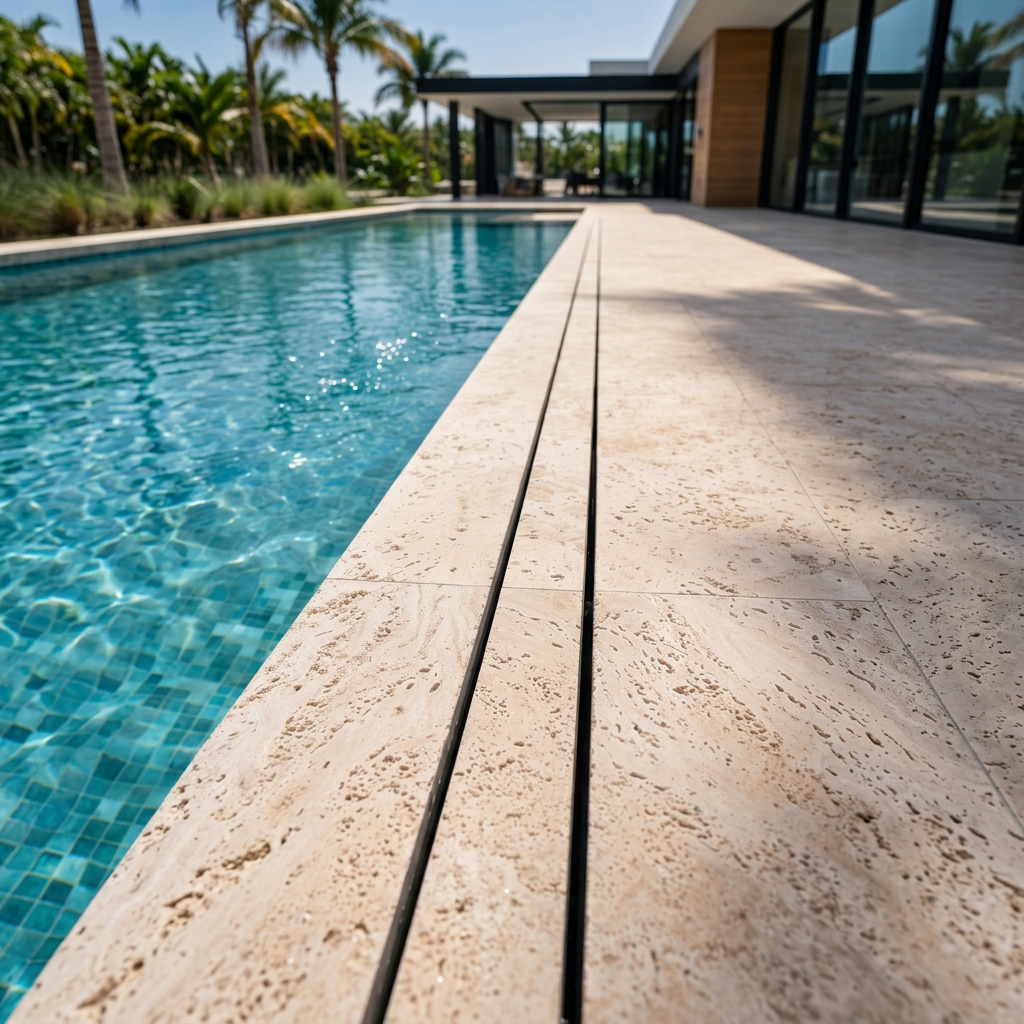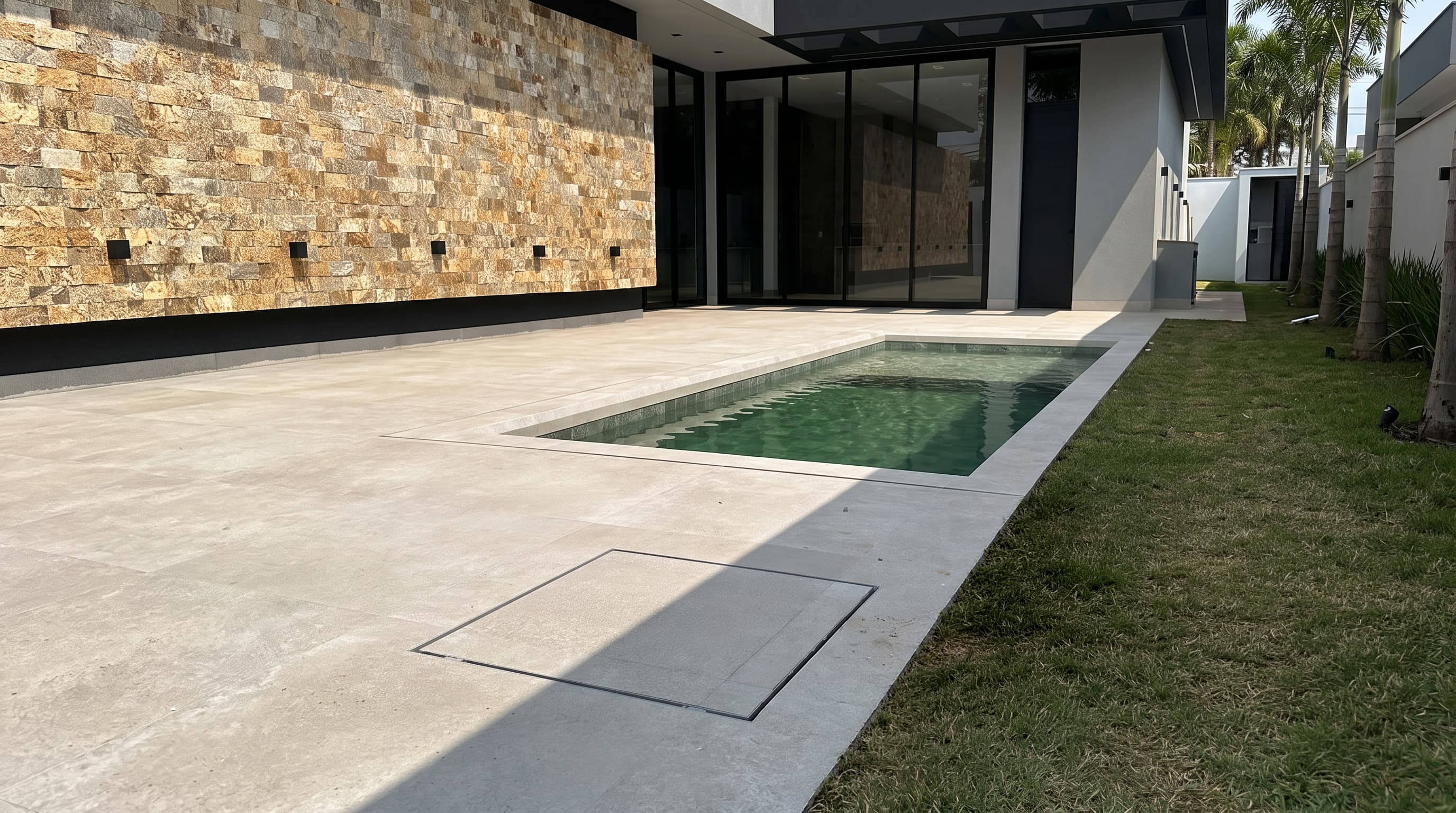
The flanged recessed hatch and the flangeless hatch share the same goal: integrating pool equipment access into the deck aesthetic with hidden hardware and a finish selected for the project.
What Both Versions Share in Common
Both versions accommodate inlaid porcelain, natural stone, or composite decking, maintaining identical height with the surrounding floor. Both utilize internal drainage channels and can be specified with gas struts or safety locking arms.
Comparison: Flanged vs Flangeless Model


DESIGN CRITERIA | FLANGED HATCH | FLANGELESS HATCH |
|---|---|---|
Ideal installation stage | During rough slab / framing stage | Finished vault with internal recess |
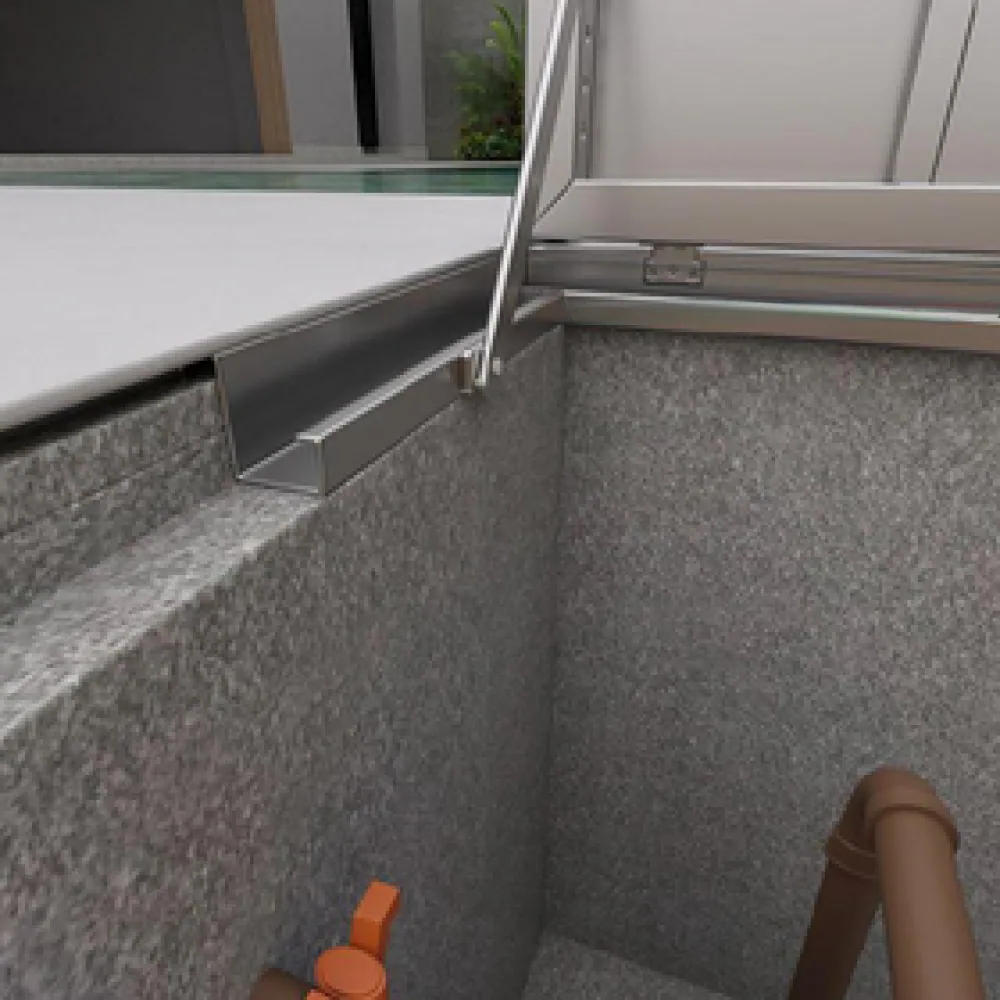
Perimeter support | 25mm external support flange | Internal frame angle inside opening |
Cutting tolerance | High (flange conceals perimeter joint) | Requires exact millimeter paver cut |
Aesthetic reveal | Minimal 2mm structural edge | Concealed perimeter slot |

When to Specify Gas Struts
For hatches measuring 100x100 cm or larger, or when heavy paver stone is inlaid, gas struts absorb part of the dead load and support controlled lifting during equipment inspections.
Engineering Recommendation for Your Project
Choose the flanged version when construction allows casting a level perimeter recess in the subfloor. Choose the flangeless version when installing inside a finished pre-formed masonry opening.